Apple Hospital is a private multi-specialty hospital in Olpad, Surat district. It runs daily OPD and inpatient care across General Medicine, Gynaecology, Paediatrics and Orthopaedics, with 15 beds, a NICU, 24×7 emergency and pharmacy, and in-house X-ray and sonography. Doctors see patients from 9 AM to 7 PM.
Ask anyone in Olpad what you do when someone at home falls properly sick. The answer has been the same for as long as most of us can remember. You go to Surat. A fever that won’t settle, a scan during pregnancy, a grandfather who slips in the bathroom and can’t get up, all of it ended with somebody loading the car. That is the habit that just changed. So let me walk you through what Olpad’s own hospital actually does, minus the brochure talk.
People say “multi-specialty” like it explains itself. It doesn’t, really. What it means in practice is that different kinds of doctors sit in the same building on the same day, and you can go from seeing one of them to getting a scan to being admitted without anyone handing you an address for somewhere else. Four main departments, diagnostics on site, beds upstairs. You come in with a problem and the people who deal with that problem are already there.
Most visits start and finish in the outpatient department. This is the ordinary stuff, the appointments that used to eat half your day in the city.
More people walk in for general medicine than anything else, and that’s exactly right. A fever dragging into its fourth day. Loose motions. Body ache you can’t explain. Blood pressure that’s been creeping up, sugar that needs keeping an eye on. This is the everyday medicine a town leans on. With a full-time MD sitting in Olpad, you stop managing these with a guess and a strip of tablets from the medical store, and start getting them seen before they turn into something bigger.
For a young family this one quietly does a lot. The mother gets her own check-up and the child sees a paediatrician on the same trip, same building, same morning. Pregnancy care and women’s health on one side. Newborn weight checks, vaccinations, the endless small fevers of childhood on the other. What used to be two separate Surat runs is now one short stop.
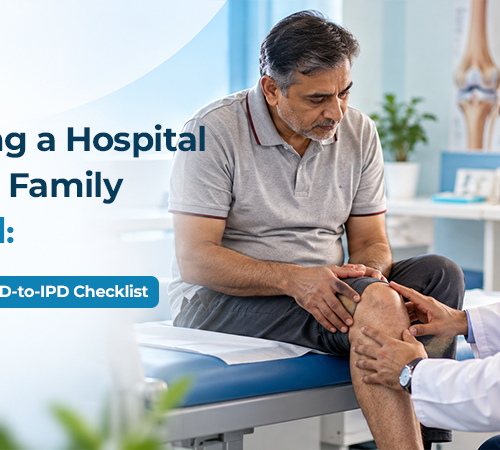
Olpad is a hard-working place, and bodies here show it. Farm work, labour, the factory belt down the road, all of it wears on backs and knees. Then there are the falls that come with age. Sprains, breaks, the dull joint pain people here have a bad habit of ignoring because getting it checked meant losing a day. Now it doesn’t.
Some days a consultation isn’t the end of it and you need to stay in. This is the part that tells you whether you’re in a clinic or an actual hospital, and it’s the part Olpad simply never had.
Fifteen beds. Sounds small until you see how they’re divided. Four general beds for regular admissions. Three ICU beds for patients who need constant watching. Two special rooms and two semi-special for people who want a bit more privacy and quiet while they heal. The ICU beds are the real story. Three critical-care beds in Olpad means that when a patient takes a bad turn, nobody has to gamble on a drive to another city at the exact moment they can least afford one.
Not every baby comes out ready to go straight home. Some are early, some are small, some just need warmth and watching for a few days before they’re out of the woods. That’s what a NICU, a neonatal intensive care unit, is for. For a new mother, knowing that kind of care exists in her own town is the difference between a calm night and a terrified one. You hope you never use it. You’re very glad it’s there the day you do.
Live in Olpad, or in one of the villages inside roughly 12 kilometres of it, and your default just moved. The nearest real option isn’t an hour away anymore. It’s here.
Add up what a Surat trip actually took out of you. Fuel, or the cost of a hired vehicle. A full day’s wages gone for whoever had to come along. Hours in a crowded, unfamiliar place, plus whatever you spent on food and autos once you got there, all before the treatment itself cost a rupee. For a quick scan or a routine follow-up, that is a punishing amount to pay again and again. And for an emergency, that distance stopped being an annoyance and started being the scariest part of the whole night.
The point isn’t just that a building opened. It’s that the specific things that used to force the trip now happen at home.
A lot of places will examine you and then tear off a slip sending you somewhere else for the actual imaging. Apple Hospital keeps X-ray and sonography in the building. A suspected fracture gets its picture taken on the same visit. A pregnancy scan happens where you’re already sitting. One building, one trip, and in most cases your answers before you leave.
Here is the part that matters more than anything else and gets the least attention. Plenty of small-town setups run on visiting consultants, a specialist who turns up for one afternoon a week. If your trouble doesn’t politely wait for that afternoon, you either sit tight or you travel. Apple Hospital’s doctors are full-time, in from 9 to 7. Same faces, who remember your last visit, so the care doesn’t reset to zero every time you come back.
Raising a family needs a doctor who knows your history, someone who can follow a pregnancy or a child’s growth across months instead of meeting you fresh every single time.
If your day can’t swallow a Surat trip, local care that’s quick and solid means you get seen and get back, instead of picking between your health and a day’s pay.
Plenty of Olpad’s people live far from home now. If that’s you, this is real relief. Your parents, your kids, proper care a few minutes from their door, and one less thing to lie awake about at 3 AM in another timezone.
We’d rather tell you straight than sell you air. Apple Hospital is built for consultation, diagnostics, admission and recovery. It isn’t set up as a big surgical centre, so for certain complex planned operations the doctors may still point you toward a larger facility. That honesty is the point. A hospital willing to say “this one’s not for us” is a hospital that’ll tell you the truth when it counts, instead of keeping you in a bed where you don’t belong.
Every visit you keep in town is fuel you didn’t burn and a day you didn’t lose. One trip, that’s a small saving. Stretch it across a year of check-ups and follow-ups and it becomes real money that stays in your pocket.
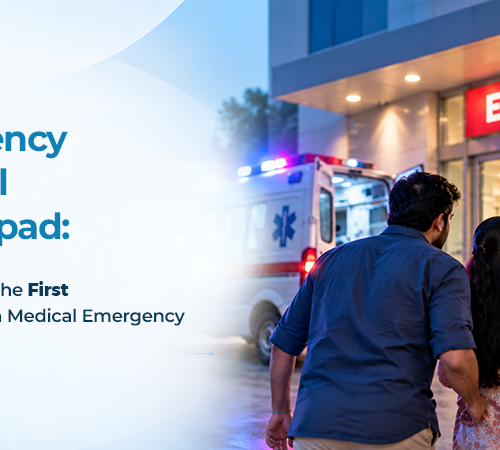
Nobody schedules a crisis for working hours. The emergency service and the pharmacy run all night, so a 2 AM emergency gets handled in Olpad. You’re not on a dark highway hoping to reach the city in time.
It’s private, serving Olpad and the villages around it, and run at fair, transparent rates meant for local families rather than city pricing.
Not as a dedicated surgical centre, no. It’s built mainly for consultation, diagnostics and inpatient care. If you need a major planned surgery, the doctors will tell you honestly where it’s best done.
Doctors are in the OPD from 9 AM to 8 PM, Mon to Sat. Emergency care is separate and runs through the night.
Yes, round the clock. The emergency service and the in-house pharmacy stay open every day, nights and holidays included.
It does. There’s a neonatal ICU for newborns who need closer monitoring and support in their first few days.
Olpad waited a long time for this, and it’s worth being clear about what finally arrived. Not another clinic that nods sympathetically and points you toward Surat. A hospital that keeps its own doctors in the building and leaves the emergency door unlocked after the OPD lights go off. That’s what “Olpad nu potanu hospital” means once you get past it being a nice line on a hoarding. The care belongs to the town now.
So if something’s been bothering you, or a check-up has been sitting on your to-do list for too long, this part is easy. Book an OPD visit, or call the hospital, and find out what having your own hospital actually feels like.